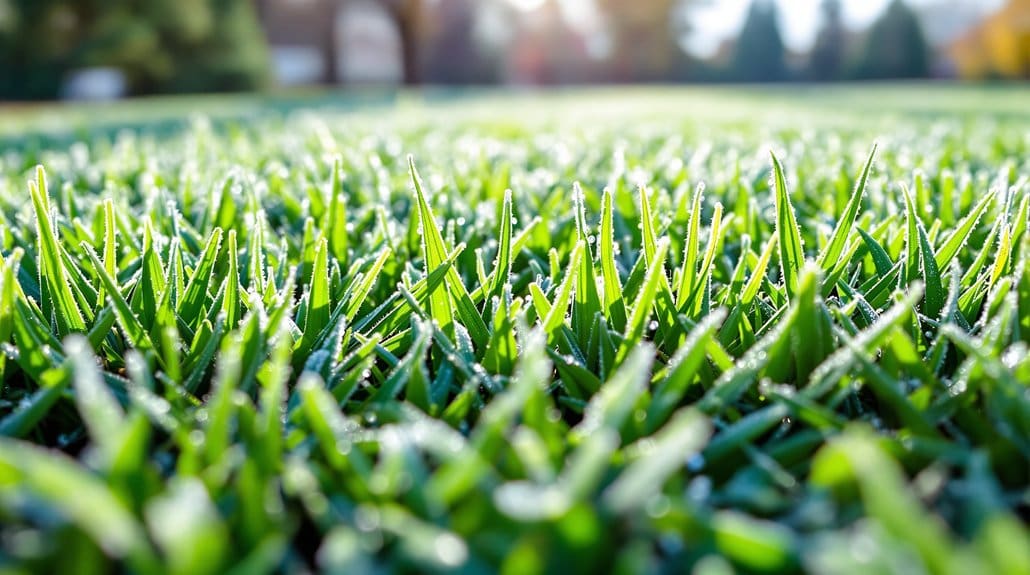
You’ll keep a green lawn in cold months by picking cool‑season grasses that match your site: tall fescue for deep roots and drought tolerance, Kentucky bluegrass for lush recovery, perennial ryegrass for fast establishment, and fine fescues for shady, low‑maintenance spots; overseed with a blend in early fall, test and amend soil pH to about 6–7, raise mower height to 3–4 inches, and water deeply but infrequently, and if you want step‑by‑step care tips, keep going.
Some Key Points
- Choose cool-season blends (tall fescue, Kentucky bluegrass, fine fescues) for the most consistent winter color.
- Tall fescue provides deep roots, drought tolerance, and year-round resilience in zones 3–8.
- Kentucky bluegrass offers lush appearance and rapid recovery but needs more water and maintenance.
- Fine fescues (creeping red, Chewings) excel in cold, shady sites and maintain strong winter color.
- Overseed with region-specific mixes in early fall, prepare soil, and raise mowing height to support winter green.
What Cold‑Weather Grasses Stay Green Through Winter?

Curious which grasses will actually stay green when temperatures drop? You’ll find cool-season grasses like tall fescue, Kentucky bluegrass, and fine fescues are your best bets for green through the winter months, and you’re not alone in wanting a lawn that feels steady and welcoming. Tall fescue, hardy in zones 3–8, gives you heat and drought tolerance, so plant it where you want resilience, while Kentucky bluegrass brings that lush look in milder winters, so choose it if appearance matters most. Fine fescues, such as creeping red and chewings, stay vibrant in cold shade, this is where they shine. The key is blending varieties to boost winter performance, now take that step and plan your mix. Consider using a premium tall fescue seed mixture to improve durability and year-round green turf performance.
How to Choose Between Tall Fescue, Kentucky Bluegrass, and Perennial Ryegrass
Picking the right grass starts with what you want your lawn to do for you, so think about sun, wear, and how much time you’ll spend on care; tall fescue, Kentucky bluegrass, and perennial ryegrass each solve different problems, and the key is matching their strengths to your yard. If you want lower-maintenance, choose tall fescue for its deep roots, excellent drought tolerance, and heat resilience, now you’ll mow and feed less. If you crave a lush, dark carpet, kentucky bluegrass gives quick recovery and that manicured look, but expect more upkeep and watch for disease under stress. For fast fixes and overseeding, perennial ryegrass germinates quickly, tolerates some shade, and offers solid cold hardiness in cooler coastal spots. Lush Lawns recommends choosing seed blends designed for your region to get the best establishment and seasonal performance, focusing on kentucky bluegrass blends and similar mixes.
Best Low‑Maintenance Evergreen Grasses for Cold Climates (Fine Fescues, Sheep Fescue)

Think of fine fescues and sheep fescue as the low-maintenance stalwarts you call on when cold, shade, and poor soil push other grasses to failure; they’re hardy in USDA zones 3–5, they stay greener through harsh winters, and they’ll cut your watering and fertilizing chores way down. You’ll find fine fescues—like creeping red and Chewings—excel in shade, blend well into mixed seed, and boost drought resistance so your yard keeps year-round green with less fuss. Sheep fescue, shorter and tufted, tolerates poor soils and creates attractive texture without much care. The key is planting them where others struggle, easing irrigation and nutrient schedules, and trusting these low-maintenance grasses to deliver resilient, evergreen results for your cold climates landscape. Consider using bahiagrass coated seed when overseeding warm-season areas in transitional climates to improve establishment and reduce maintenance.
Ornamental Blue and Clumping Grasses That Hold Color (Blue Fescue, Blue Oat Grass)
Want a splash of cool, lasting color that won’t demand constant babysitting? You’ll love ornamental choices like blue fescue and blue oat grass, they give your garden distinctive bluish tones and textures while fitting into a group that cares for each other’s space. Blue fescue (Festuca glauca) stays compact at 6–12 inches, handles full sun to partial shade, and sends up delicate summer spikes, so plant it where you want consistent low, sculpted color. Blue oat grass (Helictotrichon sempervirens) grows 2–5 feet, offers upright form and oat-like flowers, and anchors sunny beds. The key is mixing these low-maintenance clumpers for contrast, now water and site properly, and you’ll enjoy true year-round color with minimal work. Fine fescue varieties are especially well-suited for shady areas and low-input lawns, making them a smart choice for homeowners looking to transform their turf with minimal effort and maintenance fine fescue.
Shade‑Tolerant Options That Stay Green (Liriope, Mondo Grass, Fine Fescues)

Now you can choose shade-tolerant options like Liriope (lilyturf), Mondo Grass, and fine fescues that stay green through cold months, each offering different heights, flowers, and winter-hardiness to match your light conditions. The key is to site Liriope and Mondo where they get partial to full shade and minimal drought stress, and to manage fine fescues with light trimming and infrequent, deep watering so they keep a lush appearance. Start by evaluating your low-light spots, then plant according to each species’ height and spacing needs, and you’ll see year-round color with very little upkeep. Consider blending species tailored to your site to create durable, low-maintenance shade-tolerant blends that perform well.
Shade Tolerant Selections
When you’re working with shady spots that stay damp or never see full sun, choosing shade-tolerant groundcovers like liriope, mondo grass, and fine fescues will give you reliable green through the cold months, and the key is picking the right form for the space and soil you have. You’ll find shade tolerant selections that suit narrow borders or sweeping shade, liriope offers taller, semi-evergreen clumps with purple spikes and berries for structure, mondo grass gives a low, resilient mat with lavender blooms and blue berries, and Fine fescues (like creeping red or Chewings) keep lush growth with minimal maintenance. In USDA zones 3–7, these choices sustain green color in low-light conditions, so plant confidently and enjoy steady coverage.
Low‑Light Care Tips
You’ve picked shade-loving plants that hold their color through cold months, and now you’ll want to give them the kind of low‑light care that keeps them looking their best; the key is balancing gentle upkeep with the limited sunlight they get. You’ll treat Liriope, Mondo Grass, and fine fescues as complementary shade-tolerant friends, trimming dead blades to tidy appearance and improve air flow, and checking soil drainage so roots don’t sit wet in winter. Now, thin dense clumps when they crowd each other, this reduces disease and invites light, and overseed fine fescues sparingly to maintain year-round green without overfertilizing. The key is regular maintenance, small interventions, and watching for stress so your grass varieties stay healthy, resilient, and belonging in your landscape.
Wet‑Site and Rain‑Garden Grasses That Remain Evergreen (Soft Rush, Slough Sedge)
If you’ve got a soggy corner that won’t dry out, don’t fight it — plant for it: soft rush (Juncus effusus) and slough sedge (Carex obnupta) are two evergreen, clumping wet‑site grasses that turn standing water into a purposeful, stable planting, and the key is picking the right one for your light and height needs. You’ll choose among grass types that thrive in wet soils, both are perennial grass, they form clumps that reduce soil erosion and boost water retention, and they create habitat for wildlife, attracting birds and aquatic insects. Now, pick soft rush for 18″–4′ texture and subtle greenish‑brown blooms, or slough sedge for 1–5′ lush foliage and stronger bank stabilization, then plant confidently. Summer lawn care products can help maintain these plantings with proper watering and edging, especially when you use seasonal maintenance practices.
Soil, pH, and Drainage Needs That Keep Cold‑Season Grasses Healthy

When you’re choosing and caring for cold‑season grasses, start by checking soil pH, because most varieties grow best between about 5.8 and 7.0, a range that lets roots take up nutrients efficiently. Now check how the soil drains — these grasses need soil that holds moisture without staying soggy, since waterlogged ground invites root rot and other problems — and this is where amendments like lime or sulfur, and adding organic matter, can correct pH and improve structure. The key is regular soil tests to spot imbalances or nutrient gaps, then make targeted adjustments so you’ll see healthier, greener turf rather than guessing at fixes. For homeowners, having reliable soil pH testing tools on hand makes monitoring and adjusting these conditions much easier.
Soil pH Range
Because soil chemistry controls what nutrients your grass can actually use, start by checking and aiming for a soil pH between about 5.8 and 7.0, which is the sweet spot for most cool‑season grasses like fescue and Kentucky bluegrass; this range helps roots absorb key nutrients and keeps the plants vigorous. You’ll join other gardeners who care for their lawns by doing regular soil testing, which tells you where your soil pH range sits and guides adjustments, now this is where ideal nutrient absorption becomes real, because when pH’s right micronutrients and macronutrients move freely to roots. The key is to monitor, act promptly if results fall outside the band, and remember that cold-season grasses prefer well-draining soils so those roots can actually use the nutrients you provide.
Drainage And Amendments
You’ve already checked pH and know where your soil sits, now focus on how water moves through that soil and what you’ll add to fix it; good drainage keeps roots from sitting in cold, soggy conditions that invite root rot and fungal problems, and the right amendments help both water flow and nutrient access. Now test texture and drainage rates, because cold-season grasses need soil that drains yet holds enough moisture, and the key is adjusting structure with soil amendments like lime or sulfur to tweak pH, plus organic matter to improve porosity and nutrient absorption. This is where compost earns its keep, you’ll mix it in, re-test nutrients, and watch healthier roots and greener turf emerge.
Watering and Mowing Schedules to Prevent Winter Browning
If you want your cool-season lawn to come through winter looking alive instead of brown and brittle, start by adjusting how you water and mow now, before the ground freezes; the key is deep, infrequent watering that soaks the root zone and mowing a bit higher than in summer so roots can store energy. You’ll care for your community green space by keeping watering schedules that let soil dry slightly between sessions, water deeply to reach established root systems, and top off moisture during late-fall dry spells to cut winter browning risk. Now, raise your mowing height to about 3–4 inches to encourage carbohydrates storage, avoid heavy foot traffic that compacts soil, and add a late-season fertilizer to support roots.
When and How to Overseed or Sod for Year‑Round Green Results?

When you want a green lawn through winter, the best time to overseed or lay sod is in early fall, because cooler nights and warm soils give new grass a chance to establish roots before the cold sets in; this is where planning and proper prep pay off. You’ll start by choosing cool-season grasses, like tall fescue or a blend suited to your region, then prepare soil by tilling and adding organic matter so seeds or sod contact good, loose earth. Now overseed thin spots or install sod that matches your soil and climate, water consistently to keep soil moist for root growth, and maintain proper mowing height and seasonal fertilizer; the key is steady care for winter resilience and a green lawn you can rely on.
Pest, Disease, and Invasive Risks for Cold‑Season Evergreen Grasses
Because cold-season evergreen lawns stay green through much of the year, they can also attract a steady stream of problems if you don’t keep an eye on them, so learning to spot and act on pests, diseases, and invasive behaviors early will save you time and turf. You’ll notice grub damage as thinning or brown patches where roots are eaten, and this is where prompt treatment matters, now often with targeted insecticides or beneficial nematodes. In humid weather brown patch and dollar spot can appear, a fungal disease problem that needs improved watering schedules and sometimes fungicide. Some fescue types act invasive, crowding natives, so regular mowing, edging, and monitoring are essential. The key is consistent lawn care and inspections, you’ll catch issues early and protect your shared green space.
Matching Grass Choice to Your Zone, Lawn Use, and Maintenance Level

You’ve been watching for pests and diseases, and now it’s time to pick the grass that’ll work with your climate, how you use the yard, and how much time you’ll spend on care. Start by matching your USDA hardiness zone to cool-season grasses: tall fescue thrives in zones 3–8, while Kentucky bluegrass prefers 3–7, so choose accordingly for winter survival and lush spring return. Next, think about use — if kids or sports demand heavy wear, perennial ryegrass fits best for quick recovery, and this is where mixes help. Finally, be honest about maintenance: tall fescue is low-maintenance and drought-tolerant, fine fescue adds shade-tolerant resilience, so pick blends that reduce chores and keep neighbors nodding in approval.
Some Questions Answered
What Is the Most Cold Tolerant Grass?
Kentucky bluegrass is the most cold tolerant, and you’ll see it bounce back from deep freezes like a resilient friend, this is where cold hardy varieties shine. For winter lawn care, choose frost resistant grasses such as Kentucky bluegrass or fine fescues, now focus on grass seed selection and overseeding early, and the key is regular prep and gentle feeding to maintaining green color, so you’ll enjoy reliable, year-round turf.
What Is the Best Grass Seed That Stays Green All Year?
Tall fescue blends are generally the best grass seed to stay green all year, especially when you choose fescue varieties suited to your zone; the key is soil preparation, overseeding techniques in fall, and consistent winter lawn care to keep roots active. You’ll get drought resistance and cold hardiness, now aerate, add compost, overseed thin spots, and water deeply but less often, this will deliver a resilient, year-round lawn.
What Is the Best Grass to Plant in October?
Kentucky bluegrass and tall fescue are top choices for October planting, and perennial ryegrass helps fill in quickly, so you’ll get cover before cold arrives. Now, prepare soil well, focus on soil preparation and fall fertilization, and watch weather considerations to time seeding right. The key is steady grass maintenance through watering and mowing, this is where community gardeners like you see rewards, so plant confidently and tend consistently.
How to Have a Green Lawn All Year Round?
You can keep a green lawn year-round by choosing right grass types, improving soil health, and following seasonal maintenance, now start with a soil test to fix pH and nutrients, then seed or overseed with hardy mixes, water smartly using efficient watering techniques like deep, infrequent irrigations, mow at recommended heights, and fertilize on schedule; this is where consistent care pays off, so stick to the plan and you’ll see steady results.