You can stop snow mold before it kills your turf by acting in fall and spring: gray or pink mold forms under prolonged snow, so mow shorter (2–2.5″), rake leaves, dethatch, aerate, and avoid late high‑nitrogen feedings, then apply a labeled fungicide in late fall if risk is high. In spring gently rake matted patches, overseed or sod bare areas, and water lightly; this restores roots and prevents weeds, now follow the steps below to learn detailed timing and products.
Some Key Points
- Remove leaves, lawn debris, and heavy thatch in fall to reduce moisture and fungal habitat under snow.
- Mow to 2–2.5 inches and aerate before winter to improve drainage and speed surface drying.
- Avoid late high-nitrogen fertilizer; apply low-nitrogen slow-release fertilizer at least six weeks before snow.
- Apply preventive fungicide (e.g., propiconazole or azoxystrobin) in late fall when temperatures are about 30–40°F.
- In spring, lightly rake matted areas, overseed thin spots, and reseed or sod large dead patches for recovery.
What Is Gray vs. Pink Snow Mold and How They Develop

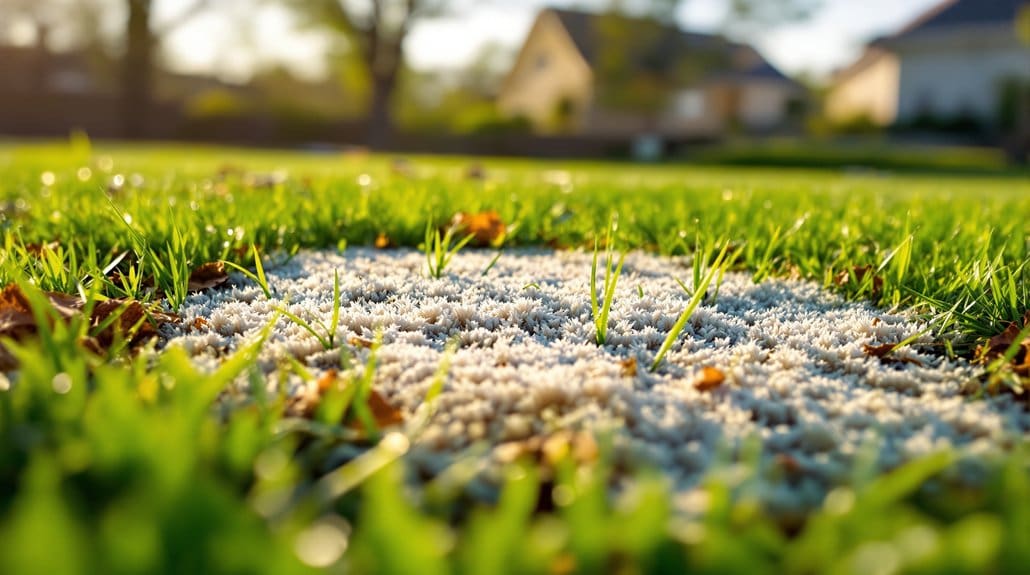
Because these two diseases look similar at a glance, it helps to know the signs so you can act before the damage gets worse. You’ll learn that gray snow mold and pink snow mold are different fungal disease problems that demand different responses, and the key is spotting how they develop so your lawn care choices help, not hurt. Gray snow mold often leaves light gray or whitish patches on grass blades, usually sparing roots so regrowth is likely, while pink snow mold forms circular patches with pinkish or rust-colored edges and can kill roots, making recovery harder. Both thrive in cool, moist, ideal conditions under prolonged snow cover, with heavy thatch, low mowing heights, and poor drainage being what causes snow mold. Effective curative treatments and targeted products can help restore affected lawns when applied correctly and at the right time for lawn disease management.
Recognizing Symptoms Early: Color, Pattern, and Texture to Watch For
When you walk the yard in early spring, pay close attention to patches that don’t green up with the rest of the lawn, because early spotting gives you the best chance to limit damage; look for circular or irregular areas that show off gray, white, or pinkish tones and feel flattened or matted where the blades stick together. You’ll notice discolored patches that stay brown longer, this is where fungal growth is active and blades may feel slimy or sticky, a clear symptom that recovery will be delayed if you ignore it. Now, gently separate matted grass to see if the blades pull apart, the key is to spot gray or pink tinges early, act promptly, and plan cleanup so your lawn can start recovery. Applying targeted summer fungicides can help prevent further spread and support recovery when conditions warm up.
Winter Triggers in Indiana Lawns: Leaves, Thatch, Snow Piles, and Late Fertilizer

If you want to keep snow mold from getting a strong foothold, start by thinking about what gets left on your lawn before and during winter, because leaves, thatch, piled snow, and late fertilizer each create conditions the fungus loves; leaves that aren’t raked trap moisture and speed decomposition against the blades, thick thatch blocks airflow and drainage so the ground stays damp, heavy snow piles from shoveling hold prolonged wet contact with grass, and a late application of high‑nitrogen fertilizer pushes soft, tender growth that lacks the root strength to resist infection. Now, recognize that in Indiana your routine lawn care makes a community difference, so act to reduce the risk of snow mold by clearing leaves, managing thatch, avoiding large snow piles, and skipping late fertilizer. Consider also using dethatching tools to reduce thatch buildup before winter.
Last Fall Tasks That Prevent Snow Mold: Mowing, Raking, Aeration, and Timed Fertilizing
Start your fall routine with a few deliberate moves that make a big difference in preventing snow mold, because small changes now keep your lawn healthier under the snow later. You’ll mow to 2–2.5 inches, cutting excess blade length so grass dries faster and gray snow mold has less habitat, and you’ll follow that by raking every leafy patch, removing damp debris so decomposing matter won’t trap moisture. Now, aeration is where you relieve compaction, creating holes that boost drainage and airflow, so water won’t sit and fungal spores won’t thrive. The key is timed fertilizing: apply a low‑nitrogen, slow‑release fertilizer in late fall, but stop at least six weeks before the first snow so roots store energy without encouraging tender top growth. Using a core aerator helps improve soil drainage and reduces conditions that favor snow mold.
Fungicide Options and When to Apply Them for Reliable Protection

Now is the time to pick a fungicide with the right active ingredient—options like propiconazole for both gray and pink snow mold, or azoxystrobin and pyraclostrobin for broader protection (azoxystrobin can also help with certain insects)—and plan to apply it in late fall before any significant snowfall. The key is to spray when your turf is dormant and temperatures are about 30–40°F, following the manufacturer’s label for dosage and technique to make sure the product works and stays safe. Combine this timed application with good fall care—mowing, raking, and clearing leaves—to boost the fungicide’s effectiveness and reduce the chance of a winter outbreak. Consider selecting products tested for pythium management to address multiple turf pathogens simultaneously.
Best Active Ingredients
When you want reliable snow mold protection, the key is choosing the right active ingredients and applying them at the right time, so you get season-long defense instead of a short-lived fix. You’ll find proven options: Propiconazole, a systemic fungicide, moves through grass to fight gray and pink snow mold, and Azoxystrobin gives broad-spectrum coverage when applied before the first snowfall. Triticonazole targets turf diseases including snow mold, and Pyraclostrobin works well in cool, damp conditions; each performs best with a late fall application. Now, this is where care matters — follow label dosage and methods, combine treatments with basic lawn care, and you’ll protect your shared neighborhood green spaces, seeing healthier turf come spring.
Timing Your Fall Spray
A late-fall spray can be the difference between waking up to healthy turf or a patchy lawn after the thaw, so aim to apply fungicides like propiconazole or azoxystrobin just before the first significant snowfall, while the grass is dry and air temperatures are cool but above freezing—about 30–50°F—to let the product settle and move into the plant; this is where timing matters most, because applying too early leaves protection to wear off and applying after heavy snow removes your chance altogether. Now, follow manufacturer mixing rates and application techniques for even coverage, consider a second treatment if wet conditions persist, and monitor lawn health through snow cover into spring, so you’ll spot gray and pink snow mold early and act to preventively limit damage.
Spring Recovery Checklist: Raking, Overseeding, Watering, and When to Reseed or Replace Sod
Now that snow mold’s faded, start by lightly raking the matted patches to lift dead grass and improve airflow, which helps the soil and crowns dry so new shoots can push up. Next, overseed thin or bare spots with a climate-appropriate blend, gently work seed into the soil, and keep those areas lightly watered to encourage germination without creating soggy conditions; this is where proper seed choice and moisture control make a big difference. If a patch stays dead after a few weeks despite reseeding, consider replacing that area with sod for immediate coverage, but remember the key is matching the grass type and prepping the soil so the new turf takes quickly. Also, choosing climate-appropriate blends and the right lawn repair products will improve long-term recovery and reduce future issues.
Light Raking Technique
One simple spring task you shouldn’t skip is light raking, because it helps break up the matted tufts left by snow mold so air and sunlight can reach recovering grass; the key is to use a gentle, back-and-forth motion with a spring-tined rake, working only after daily temperatures are consistently above about 55°F so the turf is actively waking up and you don’t tear roots. Now, when you rake, focus on removing dead grass and remove leaves and debris that trap moisture, this improves airflow and helps your lawn care efforts; the goal is to expose soil where thin spots appear, then you can add grass seed and plan overseeding. This is where regular monitoring pays off, so you spot progress and act if patches persist.
Overseeding Best Practices
After you’ve light-raked away the matted, dead grass and cleared leaves and debris, overseeding is the essential next step to thicken thin patches and prevent weeds from moving in, and the key is to act promptly while soil temperatures are in that 50°F–65°F sweet spot for germination. Now, walk the lawn and target patches of dead grass, loosen soil with a rake or gentle lawn aeration to improve seed-to-soil contact, then spread a quality grass seed mix matched to your lawn type. Lightly press seed into the soil, water consistently to keep surface moisture but avoid puddles, and watch new grass blades emerge. This is where patience pays off: monitor growth, adjust watering, and you’ll rebuild turf that feels like home.
Reseed Versus Sod
You’ve raked away the matted, diseased grass and overseeded the thin spots, so next you’ll decide whether to keep repairing with seed or replace the worst areas with fresh sod — and the choice comes down to how much damage you’re facing and how fast you want results. Now, if you’re seeing scattered snow mold patches or thin spots, reseeding is your friend, overseeding when soil temps hit about 50°F, lightly watering to keep seed moist but not soggy, and watching for signs of further fungal growth. This is where sod makes sense: large areas of dead grass need immediate restoration, and you’ll match grass type for uniform lawn care. The key is monitoring both approaches and adjusting watering and care as they recover.
Some Questions Answered
Will Snow Mold Kill My Lawn?
Yes, snow mold can kill your lawn, but it doesn’t always; picture pale, circular patches where blades and roots look ruined, now imagine restoring them with steady care. Snow mold, a turf disease, threatens lawn health in wet, cold winters, and the key is seasonal maintenance: rake, overseed, improve drainage, follow prevention tips, and provide winter care. Do this, and grass recovery is likely, you’ll see regrowth by spring.
How Long Does Snow Mold Last?
Snow mold duration usually lasts until temperatures rise above about 55°F and the soil dries, so symptoms can persist for weeks. You’ll see snow mold symptoms like circular dead patches, and the snow mold types (gray vs. pink) affect recovery differently, so your snow mold treatment and snow mold prevention matter. Now, rake and assess damage, reseed where roots died, and follow prevention steps next season; the key is timely, steady care.
Should You Rake Snow Mold?
Yes, you should rake snow mold, gently teasing apart the matted areas so air and sun can help with lawn recovery, now that snow’s gone and snow mold signs are visible. The key is using careful raking techniques, removing dead grass without hurting living crowns, combining winter care with ongoing lawn maintenance and prevention methods. This boosts grass health, helps new shoots emerge, and gives you confidence you’re steering recovery the right way.
Is Snow Melt Bad for Grass?
Snow melt isn’t inherently bad for grass, but its snow melt effects can harm grass health when moisture levels stay high and soil temperature stays near freezing, this is where fungal issues like snow mold take hold. Now, for lawn care and winter maintenance, you’ll want to manage excess water, clear leaf litter, and improve drainage so spring recovery is quicker and stronger, and you’ll see healthier turf once the ground warms.