
You want a tough, dark-green Kentucky bluegrass lawn that establishes quickly and resists wear, so start with these top blends: Outsidepride Midnight for dense color, Nature’s Seed Blue Ribbon (80% bluegrass + 20% rye for fast cover), GreenView Fairway Formula for quicker germination, The Andersons Stadium Mix for extreme wear tolerance, and Pennington Smart Seed for sunny spots with starter fertilizer; pick by your sunlight, traffic, and zone, and keep watering and mowing to specs to see results—more specifics follow.
Some Key Points
- Choose blends combining high-percent Kentucky bluegrass with perennial ryegrass for fast germination and long-term density.
- Prioritize cultivars labeled for extreme wear tolerance and rhizome-forming recovery for lawns with heavy foot traffic.
- Select seed mixes bred for disease and pest resistance to reduce chemical inputs and long-term maintenance.
- Match blends to your USDA zone and plant when soil temps reach about 55°F for best establishment.
- For partial shade or quick overseeding, pick mixes with ryegrass and higher germination rates (14–28 days).
Outsidepride Midnight Kentucky Bluegrass Seed (5 lb)

If you’re looking for a blend that gives you a dense, dark blue-green lawn with less fuss, Outsidepride’s Midnight Kentucky Bluegrass (5 lb) is a smart choice, especially if you manage a home turf, park, or athletic field that sees regular wear. You’ll appreciate its dwarf habit and drought tolerance, and the OptiGrowth coating, which adds Zinc, Phosphorus, Nitrogen and Elko (a kelp extract) to boost roots and reduce mowing. Seed at 2–3 lbs/1,000 sq ft for new turf or 1–1.5 lbs for overseeding, plant when soil hits 55°F, and expect a thick, resilient carpet that holds up.
Best For: Homeowners, parks, and athletic fields in northern or transition zones who want a dense, dark blue-green, low-maintenance lawn that tolerates traffic, shade, and drought.
Pros:
- OptiGrowth coating provides Zinc, Phosphorus, Nitrogen and kelp extract to promote root development and reduce mowing.
- Dwarf growth habit and high NTEP ratings deliver a soft, dense, dark blue-green turf that withstands wear.
- Good heat, cold, and shade tolerance; suitable for new turf and overseeding with reliable establishment.
Cons:
- Kentucky bluegrass can take longer to fully establish than some fast-germinating grasses.
- May require more water during establishment in very dry conditions despite drought tolerance.
- Not ideal for hot, humid southern climates where warm-season grasses perform better.
Nature’s Seed Blue Ribbon Kentucky Bluegrass & Ryegrass
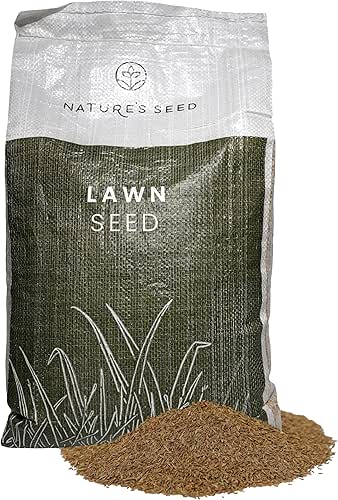
For a busy household that wants a lawn that looks great fast and keeps repairing itself, Nature’s Seed Blue Ribbon is a smart pick: it blends 80% Kentucky bluegrass for that dense, deep-green carpet with 20% perennial ryegrass to germinate quickly and stabilize soil, so you get both long-term richness and near-term coverage. You’ll plant a seed mix built for northern climates, in a 5 lb bag, and watch ryegrass show green fast while Kentucky bluegrass establishes a durable sod, the key is consistent watering at first, then mow and monitor traffic, now enjoy a resilient lawn year-round.
Best For: busy northern U.S. households and families with kids or pets who want quick greening, durable year-round turf, and low-maintenance repair from wear.
Pros:
- Fast initial coverage from 20% perennial ryegrass with long-term density and color from 80% Kentucky bluegrass.
- Self-repairing, high-traffic tolerance suitable for active families and pets.
- Low-maintenance and shade-tolerant mix that performs across seasons in appropriate hardiness zones.
Cons:
- Formulated for northern climates—may not perform well in warmer southern regions.
- Requires consistent watering during establishment to achieve best results.
- Needs full sun for optimal growth, so heavily shaded yards may see reduced performance.
GreenView Fairway Formula Grass Seed Kentucky Bluegrass Blend - 3 lb. Bag
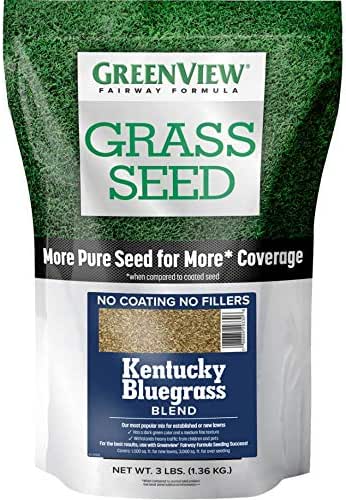
Gardeners and property managers who want a lush, classic lawn with reliable performance will find the GreenView Fairway Formula Kentucky Bluegrass Blend a smart choice, especially when you need a mix that establishes quickly and stands up to summer stress. You’ll sow a curated blend that thrives in sun and tolerates light shade, works in common soils, and is 99.9% weed-free, so start with weed-free soil for best results. Germination comes in 14–28 days, then this blend builds deep roots, becomes drought and heat resistant, and, with proper maintenance, resists insects, disease, and brown patches.
Best For: Gardeners and property managers seeking a classic, quick-establishing Kentucky bluegrass lawn that tolerates sun and light shade and stands up to summer stress.
Pros:
- Curated Kentucky bluegrass blend that germinates reliably in 14–28 days for quicker establishment.
- 99.9% weed-free seed and suitable for all common soil types when starting with weed-free soil.
- Develops deep roots and becomes drought-, heat-, and pest/disease-resistant with proper maintenance.
Cons:
- Best performance requires starting with weed-free soil and ongoing maintenance to resist issues.
- Tolerates only light shade, so not ideal for heavily shaded areas.
- May take time to fully mature into a dense lawn despite relatively quick germination.
The Andersons Stadium Mix Kentucky Bluegrass Grass Seed - 3 lbs.
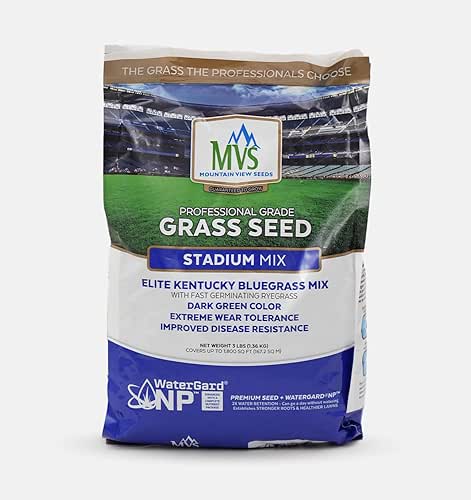
Think of the Andersons Stadium Mix as your go-to for busy yards and small athletic fields, especially when you need turf that bounces back fast from heavy use; you’ll get an elite Kentucky bluegrass blend that’s been chosen for extreme wear tolerance and improved disease resistance, so you can expect a darker, more uniform lawn that stands up to traffic. You’ll like that it’s coated with Watergard NP to retain twice the moisture, contains 0.00% weed seed for a cleaner stand, and covers up to 1,800 sq ft for overseeding or 600 sq ft for new lawns, so plant in full sun to partial shade.
Best For: Homeowners and small athletic field managers who need a durable, dark-green Kentucky bluegrass turf that withstands heavy traffic and recovers quickly.
Pros:
- Elite Kentucky bluegrass blend with extreme wear tolerance for high-traffic areas.
- Coated with Watergard NP to retain 2X moisture, improving establishment and drought resilience.
- Contains 0.00% weed seed and offers improved disease resistance for a cleaner, healthier lawn.
Cons:
- Best suited for cool-season climates; not ideal for warm-season regions.
- Coverage (600 sq ft new lawn / 1,800 sq ft overseed) may require multiple bags for larger areas.
- Performance depends on full sun to partial shade—may thin in dense shade.
Pennington Smart Seed Kentucky Blue Grass Mix 3 lb

If you’re tackling a sunny patch that gets about four to six hours of direct light and want a lawn that fills in thick and stays durable, the Pennington Smart Seed Kentucky Blue Grass Mix 3 lb is a smart choice, especially if you’re aiming to cover up to 2,000 square feet without fuss. You’ll get a Kentucky bluegrass blend with starter fertilizer, designed to produce dense, lush turf that resists disease and handles foot traffic, now showing results in 15 to 30 days. The key is consistent watering, because this mix saves water over time, so plant properly and watch it establish.
Best For: Homeowners or renters with sunny to partly sunny lawns (4–6 hours of sun) who want an easy-to-establish, dense, and durable Kentucky bluegrass lawn for up to ~2,000 sq. ft.
Pros:
- Contains Kentucky bluegrass blend plus starter fertilizer for quicker establishment (results in 15–30 days).
- Formulated to produce dense, lush turf that resists disease and handles foot traffic.
- Water-efficient variety that can save water over time compared to ordinary grass seed.
Cons:
- Best suited to areas with 4–6 hours of sunlight; may underperform in full shade or full sun extremes.
- 3 lb bag covers up to 2,000 sq. ft., which may be insufficient for larger yards without purchasing multiple bags.
- Requires consistent watering and proper planting for optimal results, which means some maintenance effort during establishment.
Factors to Consider When Choosing Kentucky Bluegrass Blends

Now you'll assess a few practical factors—start with your climate and USDA zone so you know which varieties will survive your winters and summers, then check sunlight levels because Kentucky bluegrass mixes differ for full sun versus shade. Next, think about traffic and wear tolerance, plus the seed composition blend (percentage of pure Kentucky bluegrass versus blends or companion grasses) to match play areas or ornamental lawns, and consider disease and pest resistance so you avoid common problems before they start. The key is to compare these traits side-by-side, pick a blend that balances your conditions and usage, and expect more consistent results when you match seed choice to real-world needs.
Climate And Zone
When you’re picking a Kentucky bluegrass blend for your yard, remember that climate and hardiness zone are the foundation of every good choice, because what thrives in one region will struggle in another; start by identifying your USDA or local hardiness zone and the typical seasonal pattern—cold, snowy winters or long, hot summers—and use that as your baseline. Now, if you live in northern or shifting zones, favor cool-season Kentucky bluegrass varieties that green up as soil temps reach about 55°F in spring or when planting about eight weeks before first fall frost, this is where blends engineered for cold tolerance and seasonal fluctuation pay off. The key is matching blends to local drought and heat stress patterns, so you’ll get consistency across seasons.
Sunlight Requirements
You've matched your lawn to the right hardiness zone and seasonal pattern, so the next thing to check is how much sun your yard actually gets, because sunlight changes everything about how Kentucky bluegrass performs. Now observe daily patterns, note areas that get full sun — at least 6 to 8 hours — since those spots will produce the densest, most vibrant turf, and expect faster recovery from stress. This is where blends with perennial ryegrass pay off, they’ll tolerate partial shade, about 4 to 6 hours, and keep growth healthier where light is limited. The key is matching blend selection to measured sunlight, because reduced light slows growth and thins turf; choose accordingly, monitor establishment, and adjust expectations for color and density.
Traffic And Wear Tolerance
Because your yard gets used — kids, dogs, sports, or heavy foot traffic — you're going to want a blend that can stand up to repeated wear and keep repairing itself, and that starts with understanding how Kentucky bluegrass responds to stress. You’ll notice it recovers by spreading through rhizomes, that underground stems let it fill bare spots, so choose blends known for strong regenerative ability; the key is blends labeled for durability or extreme wear tolerance, which hold up and stay lush under frequent use. Now, mixes that include perennial ryegrass help with quick greening and stabilization after damage, and varieties with improved disease resistance reduce downtime; this is where you pick for your activity level, expect faster recovery, and see a consistently vibrant lawn.
Seed Composition Blend
If you want a lawn that looks dense and recovers well, start by reading the seed label closely, because the exact mix of Kentucky bluegrass and companion grasses determines how quickly it greets the season, how tough it stays underfoot, and what maintenance you'll need to keep it healthy. You'll see percentages for Kentucky bluegrass and companions like perennial ryegrass, and the key is matching those ratios to your goals: higher bluegrass gives rich color and tight density, while ryegrass speeds germination so bare spots fill in fast. Now, if you need wear tolerance, pick blends with varieties known for self-repair; if you face shade or drought, choose blends formulated for those conditions, and plan maintenance accordingly.
Disease And Pest Resistance
You’ve already looked at seed percentages and how companion grasses affect growth, now turn your attention to disease and pest resistance because that’s where long-term lawn health really shows up; choosing varieties bred for resistance cuts down on fungicide use and late-season repairs, so you’ll spend less time troubleshooting and more time enjoying the yard. Focus on blends that list proven resistant cultivars, this is where breeders help you avoid common trouble, especially brown patch, a fungal disease that loves warm, humid conditions. Now pick mixes with weed-free seed coatings to limit invasive competition, and favor blends whose varieties are noted for pest resilience, because a thicker, healthier turf naturally deters insects and pathogens. The key is selecting resistance up front, then maintaining it.
Establishment And Germination
Starting a new lawn or patching old turf calls for patience and a plan, so set expectations that Kentucky bluegrass can take two to four weeks to show true germination and that your timing and prep will make all the difference. You’ll want soil temperatures around 55°F before you sow, because warmth speeds establishment, and you should remove existing weeds so seeds don’t face needless competition. For new turf seed at 2–3 lbs per 1,000 sq ft, overseed at 1–1.5 lbs per 1,000 sq ft to fill gaps without overcrowding, and consider coated seed that carries small nutrient packages to boost germination and early growth. The key is correct timing, clean seedbed prep, and realistic expectations for visible results.
Maintenance And Water Needs
Water management will shape how your Kentucky bluegrass performs, so learn the basics now and you’ll save time and stress later. You’ll generally aim for 1 to 1.5 inches of water per week, especially during establishment, and you’ll check soil moisture to avoid overwatering; now, once established, blends with OptiGrowth coatings or low‑maintenance selections improve drought tolerance by strengthening roots, so you’ll need less frequent watering and mowing. The key is a balanced program: moderate fertilization every 6 to 8 weeks during the growing season keeps plants vigorous, which reduces disease and pest problems, and healthier turf withstands traffic better. If you pick drought‑resistant, low‑maintenance blends, expect lower water use and fewer interventions over time.
Some Questions Answered
What Is the Best Fertilizer Schedule for Kentucky Bluegrass Blends?
You should fertilize Kentucky bluegrass blends four times a year: apply a slow-release nitrogen fertilizer in early spring as growth resumes, a lighter feeding in late spring, the main, higher-nitrogen application in early fall to build roots, and a final low-rate, potassium-rich application in late fall to improve winter hardiness. Water after each application, mow regularly, and test soil every 2–3 years, because the key is balanced nutrients timed with growth stages.
Can Kentucky Bluegrass Blends Be Used in Shaded Areas?
Yes, you can use Kentucky bluegrass blends in shaded areas, but expect slower growth and thinner turf; the key is choosing blends with shade-tolerant varieties and mixing in fine fescues, which handle low light better. Now, reduce mowing height slightly, raise irrigation frequency but cut volume, and thin tree canopy to add light. This is where regular overseeding each fall and balanced fertilization will produce denser, healthier lawn over time.
How Long Until Kentucky Bluegrass Blends Fully Establish?
You’ll typically see a Kentucky bluegrass blend start to root and show blades within 2–3 weeks, but full establishment usually takes 8–12 weeks, sometimes up to a full growing season depending on temperature, soil, and watering. Now focus on consistent, deep watering, light mowing once it’s 3–4 inches, and feeding with a starter fertilizer; this is where patience pays off, because steady care accelerates thick, resilient turf.
Are These Bluegrass Blends Safe for Children and Pets?
Yes — these blends are generally safe for children and pets if you follow label directions, avoid treated seed mixes that include insecticides or herbicides, and keep kids and animals off newly seeded areas until soil contact risks (like loose seed) pass; water and let seedlings establish, then resume normal use. The key is checking product ingredients, using organic or untreated seed when possible, and supervising play during early growth.
Can Kentucky Bluegrass Mixes Be Overseeded Into Existing Lawns?
Yes, you can overseed Kentucky bluegrass into existing lawns, and you’ll get best results when you prep soil, mow low, dethatch if needed, then scarify or aerate to create seed-soil contact; spread quality seed evenly, lightly rake, and water gently but frequently until seedlings establish. The key is timing—late summer to early fall—plus reducing competition from weeds, keeping feet off the area, and tapering water as sprouts mature for durable, blended turf.


